For medical cannabis patients who've already tried — and still aren't getting results

Cannabis was supposed to help.You are not the problem.

You followed the protocol. You read the guide. You tried the products. And it still isn't working — or it worked for a few weeks and stopped. That's not a you problem. That's a system problem. In 90 minutes, I can show you exactly what to fix.

90 seconds with Gil · What's actually broken, and what the fix looks like
Not sure yet? Take the 60-second Self-Check 90 min · Written Titration Map same day · 7 days follow-up included
10,000+
Patients
guided through onboarding
Patient #7
Israel
Ministry of Health
2008
MoH-Licensed
Instructor since
20 yrs
Inside cannabis
education at every level
Programmes built for · advised · or educated
Tikun Olam BOL Pharma Bazelet Group IMC Israel Ministry of Health Czech Parliament IMCA Founder
01 · Why it's not working

You were handed a complex medicine with no instructions. That's the whole problem.

Someone handed you a product with a strain name and a percentage. Maybe a leaflet. And then you were expected to figure out the rest on your own.

That is not a system. What you were given is one of the most pharmacologically complex substances on the planet — with no starting dose, no escalation schedule, no condition-to-product matching, and no one to call when something went wrong.

There are exactly three reasons medical cannabis fails. One of them — probably more than one — is why you're here.

Reason 01
The Expectation Gap
Your body needs 14–21 days of consistent, low-dose exposure before therapeutic effects stabilize. Most patients give up in the first week because nobody told them what a real onboarding timeline looks like.
You made the right decision based on completely wrong information. The plant didn't fail. The timeline you were given failed.
Reason 02
The Biphasic Trap
More is not better. A dose that's too high can actively worsen anxiety, pain, or sleep. There's a precise sweet spot — and nobody showed you how to find it. So you escalated, felt worse, and assumed cannabis wasn't for you.
If you felt worse on a higher dose, you didn't fail. You hit the biphasic curve. It's a known effect. It has a known fix.
Reason 03
No Guidance
You were handed a product and left to figure it out alone. No dosing plan, no follow-up, no one checking in. That's not a medical system — that's trial and error with your health as the experiment.
Every other serious medication in the world comes with calibration. Cannabis was handed to you with a leaflet. That's the gap I fill.
Which one is yours?
The 60-Second Titration Self-Check

Four questions. Pick the honest answer. You'll get a personalised read on which failure mode is yours — and what to do next.

1. Did you expect relief within the first week and feel like it "wasn't working"?
2. Have you increased your dose and felt worse, not better?
3. Were you handed a product with no written dosing plan?
4. Do you still not know if you're using the right cultivar or ratio for your condition?
Result · On Track
You may already be doing most of it right.
Your answers suggest you're not hitting the classic failure modes. If you still feel stuck, there's likely a finer calibration issue — and you can confirm it with the free written self-assessment.
Result · Fixable Pattern Detected
You're hitting one of the three failure modes.
This is exactly what a Rescue Analysis is designed for. A 90-minute call with a written Titration Map will resolve it faster than more trial and error. You can also grab the free self-assessment first if you want to read before you book.
Result · Priority Pattern
You are exactly who I built this for. Let's fix it this week.
Three or four of these means the system you were given has failed you on every major axis. This is fixable — and it's faster than you think. A Rescue Analysis gets you a personalised Titration Map you can start tonight, plus seven days of direct follow-up so we calibrate it in real time.
Common thread: Every one of these failure modes is a guidance gap, not a medicine gap. The plant works. The delivery system is broken. That's what I fix.
02 · Real patients

Three patients. Three different conditions. Same pattern.

Sleep / Insomnia
Margaret
64 · Chronic insomnia · 9 months on cannabis
BeforeSleeping 2–3 hours a night for nearly a year. Had tried three different cultivars and kept increasing the dose. Waking up more tired, not less.
After 30 daysConsistent 6–7 hour nights. Dropped her dose by 60%. Off the backup sleep medication she'd relied on for years.
"Gil spent ten minutes on my intake and told me exactly what I was doing wrong. I'd been escalating when I should have been pulling back. Nobody had ever said that."
Crohn's / IBD
Robert
59 · Crohn's disease, 22 years · 5 months on cannabis
BeforeInflammation flares every 2 weeks. Oil too strong, flower too unpredictable. After two decades managing Crohn's, he was considering quitting the cannabis protocol entirely.
After 60 daysZero flares for 60 days. Titrated to a stable micro-dose schedule. Back at work full-time, travelling again.
"He's the only person I've spoken with who actually understood Crohn's and cannabis as one problem, not two separate ones."
Chronic Pain
Linda
61 · Chronic lower-back pain · 7 months on cannabis
BeforeUsing daily, pain no better than before. Felt drowsy most of the day. Thought she "wasn't using it right" but nobody could explain what right looked like for her.
After 21 daysStabilised on a CBD-forward daytime ratio and a different cultivar at night — a combination she'd never been offered. Pain reduced by about half. No more daytime drowsiness.
"I wasn't using it wrong — I was being given the wrong thing to use. Gil figured that out in the first call."
Representative patient outcomes · Individual results vary · Names used with written consent
03 · The result, at scale

Most patients who gave up thought it wasn't working. It was. They had no protocol.

Patients without structured onboarding
4 months
Average retention before dropping out of treatment entirely — convinced cannabis didn't work.
Patients with structured onboarding
34 months
Average retention. 8.5× longer. Most importantly: still reporting therapeutic stabilization.

This is not theoretical. Between 2008 and the early 2020s, the structured onboarding programs I built ran inside five of Israel's largest licensed cannabis operators — Tikun Olam, BOL Pharma, Bazelet Group, and IMC. The programs were eventually discontinued for internal operational reasons. The patient outcomes were not in dispute.

"Those programmes are no longer running inside the companies. That is why I am doing this directly — because the patients who need this guidance still exist, and the system still isn't providing it. You shouldn't have to wait for a corporation to prioritise your care."

— Gil Luxenbourg

04 · Who I am

I'm not a doctor. I'm the patient who built what the doctors weren't building.

GL
Gil Luxenbourg
Licensed MoH Medical Cannabis Instructor · Patient #7 · 20 years

In 2004 I had Crohn's disease and nothing else had worked. I became the seventh patient in Israel to receive a medical cannabis license — the first to get one by direct application to the Ministry of Health, without a court order. The six before me had all required judicial intervention.

And then I did what nobody else was doing: I built the education system the medical world didn't have. I founded the Israel Medical Cannabis Association in 2005. I became the first MoH-licensed medical cannabis instructor in 2008. I designed Israel's first structured patient-education program — the one that produced the 4-to-34-month retention result at scale. In 2012 I built the first nurses' training program. I've lectured doctors on cannabis therapeutics. I've advised three governments.

I am not a doctor. I never claimed to be. What I am is the patient who was pushed into building the patient-education system that patients, nurses, and doctors all ended up learning from — because no one else was doing it.

Credentials
Patient #7 in Israel — first to receive a Ministry of Health medical cannabis license by direct application, without a court order (2004). The six before him all required judicial intervention.
First MoH-licensed Medical Cannabis Instructor (2008) — formal Ministry of Health designation. This is his credential.
Founder, Israel Medical Cannabis Association (IMCA) — 2005. Chairman through 2016.
Architect of Israel's first patient-education program (2008) and first nurses' training program (2012) — the programs that produced the 4→34 month retention result at scale inside Israel's largest licensed operators.
Senior Consultant, Medical Cannabis Lobby at the Knesset (2016–2018). Addressed the Czech Parliament Health Committee (2012). Consulted for Israel, the Czech Republic, and Bulgaria.
US Patent US11346051B2 (2022) — terpene-infused paper products. Scaled to 100,000 units/month through Cannaboost.
05 · Inside the session

Ninety minutes. Here's what we do with them.

Before · Day 0
I read you before we speak
You fill in a clinical-grade intake — current medicine, dose, timing, conditions, what's working, what isn't. I read it before the call. No blank-slate introductions. Your 90 minutes start the moment we connect.
During · 60–90 min
We map the break — and build the fix, live
On a video call, we map out exactly where your current use is breaking down. I build your Titration Map live — starting dose, escalation schedule, product criteria, what to watch for, what to stop. You leave with a written education document you can start tonight.
After · 7 days
I adjust when your body shows us what it needs
Your full session recording and transcript land in your inbox — yours to keep and review at your own pace. Over the next seven days you message me when something comes up, and I adjust the map in real time. This is where most guides stop. It's where the real work starts.
06 · The offer

Ninety minutes. A written protocol you can start tonight.

WIZDOM Rescue Analysis
The rescue. The map. The follow-up.
$500 One-time · No subscription
Remote · Worldwide
What's included
Pre-session intake review — I read your full clinical-grade profile before we speak.
60–90 minute 1:1 video session — directly with me, no assistants, no pre-recorded modules.
Personal Titration Map — a written education document with your calibrated starting dose, week-by-week schedule, and product criteria. Delivered same day.
Full session recording + transcript, sent to you — to review at your own pace. We don't keep the recording; we keep only a privacy-scrubbed transcript you control.
7 days of direct follow-up — message me when something comes up. I adjust the map in real time.
Book My Rescue Analysis — $500
This week: 3 of 5 rescue slots remaining · New week opens Monday
If I'm not the right person to guide you, I'll tell you in the session and refund your $500. I've turned patients away before — usually because another intervention needs to happen first with a doctor or specialist, not with an educator like me. Turning away money I don't deserve is how I earn the money I do deserve.
After the Rescue Analysis — if you need it
Ongoing programs, only if it's the right fit
For patients who need ongoing calibration — complex conditions, multiple medications, or past treatment failures — there are longer programs that pick up where the Rescue Analysis ends. Bi-weekly check-ins, direct access, month-by-month map updates. Offered only at the end of your Rescue Analysis, only if it's the right fit. No pitch, no pressure. You'll know in the room. Pricing and structure shared at the close of our call.
Free · No obligation
The 4-Question Titration Self-Check

Take 60 seconds. Find out exactly which of the three failure modes is yours — and get a 2-page written self-assessment with one specific action you can take this week. Sent to your inbox in under 30 seconds.

No spam. One email, two pages, then it's in your hands.
Check your inbox — your self-assessment is on its way.
07 · What patients ask first

Questions patients usually ask first.

I already tried a free online dosing protocol or a self-serve cannabis education course. Why would this be different?+
Free protocols and self-serve courses work for one kind of patient — someone whose body responds cleanly to textbook guidance, who has time to self-experiment, and who isn't in acute distress. If that's not you — if you tried a generic protocol and never stabilised, or stabilised and then drifted — it's because no generic guidance can account for your specific condition, your current medications, your body chemistry, or your treatment history. What I do is what a generic protocol can't: I calibrate to you, in real time, with a human who adjusts when your body doesn't behave like the textbook.
Are you a doctor?+
No. I'm not a doctor and I've never claimed to be. I'm a patient (Crohn's, licensed in Israel since 2004) who was pushed to build the patient-education system that didn't exist. I'm the first MoH-licensed Medical Cannabis Instructor in Israel (2008). I built the programs that trained the nurses and lectured the doctors. If your situation needs a doctor's intervention — not education — I'll tell you in the session and refund your $500.
Will my session be recorded? What happens to my data?+
Yes. Every session is both audio-recorded and transcribed so you have a complete reference after the call. The original audio file and transcript are sent to you for your own records — you own them. On our side, we do not keep the original recordings. The transcription goes through a cleaning process that strips out identifying information (names, locations, personal references), and what's stored in our system is a privacy-scrubbed transcript tied only to your personal patient identifier. Only you can grant us access to your own record — without your identifier, we can't tell which clean transcript belongs to which patient. This is deliberate: if there were ever a breach of our system, nothing in it could be tied back to any patient. Your privacy is structural, not promised.
What happens if I'm not a good fit after we talk?+
I'll tell you in the session and refund your $500. I've turned patients away before — usually because another intervention needs to happen first with a doctor or specialist, not with an educator like me. Turning away money I don't deserve is how I earn the money I do deserve.
How does payment work?+
When you book on the scheduling page, you're taken straight to PayPal to complete your advance payment. Your payment is what confirms the slot on the calendar — the session isn't held until it clears. One-time, $500. No subscription, no auto-renewal, no surprise charges. You can pay via PayPal balance or any major credit card through PayPal's checkout. Longer ongoing programs are offered separately — only at the end of the Rescue Analysis, and only if it's the right fit.
How quickly can I get an appointment?+
I personally review every intake before accepting a new patient. I only take five new patients a week — not because it sounds exclusive, but because that's what real guidance costs in time. Book through the calendar and you'll see this week's remaining slots. If the week is full, you can join the list for Monday's opening.
I've already spent money on cannabis that didn't work. Why spend more?+
Fair question. The money you've spent is on product. What you've been missing is the thing product alone can't give you — a written, personalised protocol and someone to adjust it when your body shows us what it needs. That's what the $500 buys. If it doesn't work — if I'm not the right person to guide you — you get your money back and you walk away knowing exactly why.
Is the session legal where I live?+
Yes. I provide education, not medical treatment or prescription. Legal status of the medicine itself varies by country — I only work with patients who already have legal access to medical cannabis in their jurisdiction. During the intake I'll confirm this. If your local situation requires a doctor to adjust your prescription, your education session will help you have that conversation with your doctor productively.
What if I can't afford the $500?+
The free Titration Self-Check is the best starting point. It's a 2-page written assessment sent to your inbox, and it identifies which failure mode is yours with one specific action you can take this week. If after that you still want guided work but the price is a blocker, email me — we'll talk. I built this career because of patients who couldn't get help. I'm not going to lock anyone out who seriously needs it.
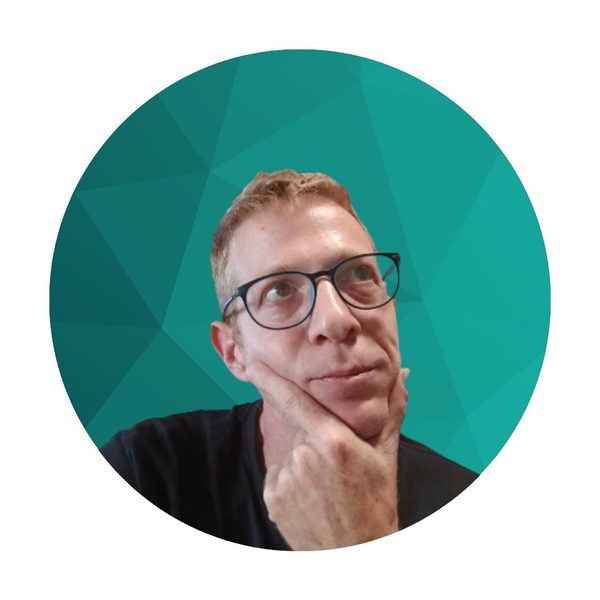
You deserve a plan that actually works.

Your Rescue Analysis includes a full intake review, your personal Titration Map, and seven days of follow-up. No obligation. No pressure. Refund if I'm not the right fit.

Not ready? Get the free Self-Check →
90 min · Written Titration Map · 7 days follow-up · Limited to 5 new patients per week